










Prop Trading
Trader education for prop firms
For prop firms we provide an education module for their traders: 8 video lessons with articles, 24 practice exercises and 15 tasks in a practice terminal that looks like a trading platform. Traders learn to read the candlestick chart, manage the risk of every trade and keep to the rules of the evaluation and of a simulated funded account. The course is in English and ends with a verifiable certificate.
How the course runs
8 video lessons · 24 exercises · 15 terminal tasks
Video
Each of the 8 lessons starts with a video that explains the topic on the chart.
Article
Under the video there is an article with charts, examples and a step-by-step procedure.
Exercises
3 practice exercises for every lesson, 24 in total.
Terminal
15 tasks in the practice terminal over a candlestick chart.
Certificate
A final quiz of 12 questions, 9 correct for the certificate.
Course content
8 video lessons from the evaluation rules to the trading journal
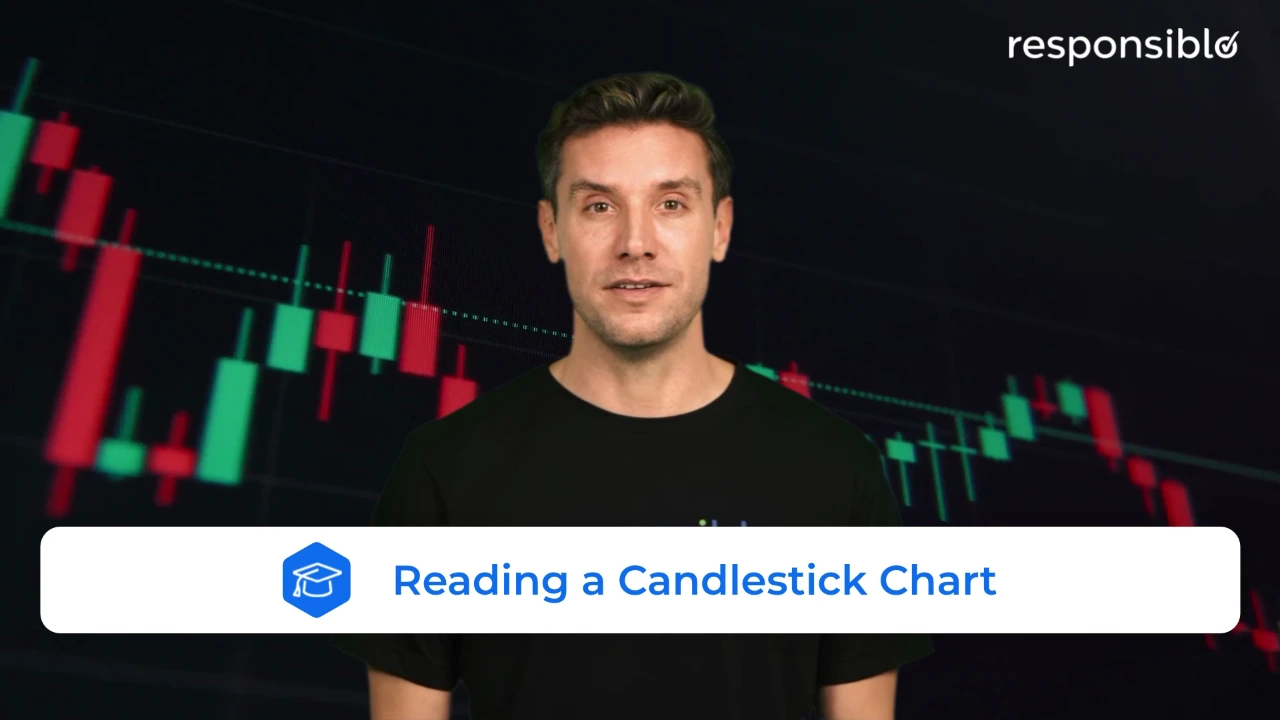
Every lesson opens with a video
The video explains the topic of the lesson on the chart, and under it there is an article with examples. The frame shows the presenter and the title of the second lesson, Reading a Candlestick Chart.
The Evaluation and the Funded Account
The profit target, the daily and maximum loss limits, minimum trading days, consistency and practices that end an account.
Reading a Candlestick Chart
Open, high, low and close, the body and the wicks, pips and how timeframes fit together.
Trend, Support and Resistance
Telling a trend from a range, support and resistance as zones and what happens after a break.
Candlestick Patterns and Their Limits
Engulfing, hammer, shooting star, doji and inside bar, and why a pattern counts only at a level and after the close.
Entry, Stop and Target on the Chart
Order types, where the stop-loss belongs, the target at the next level and the risk-to-reward ratio.
Position Size From Risk
From risk in percent to dollars, stop distance and lots, rounded down.
Planning the Day and Trading Around News
A plan before the platform opens, levels from the higher timeframe, the news calendar and your own stop for the day.
Journal and Discipline Under Pressure
What to record for every trade, reviewing the week in R and what to do after a series of losses.
Final quiz
12 questions, 9 correct for the certificate. The certificate has a unique number, a QR code and a public verification page.
Practice
The practice terminal and practice exercises
01
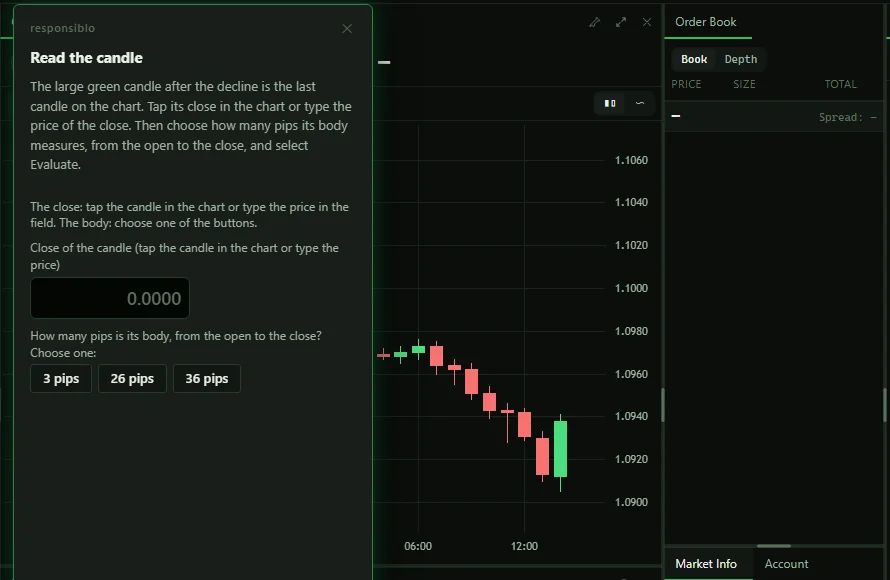
Read the candle on the chart
A task in the practice terminal: the trader finds the close of the large green candle after a decline and works out how many pips its body measures from the open to the close.
02
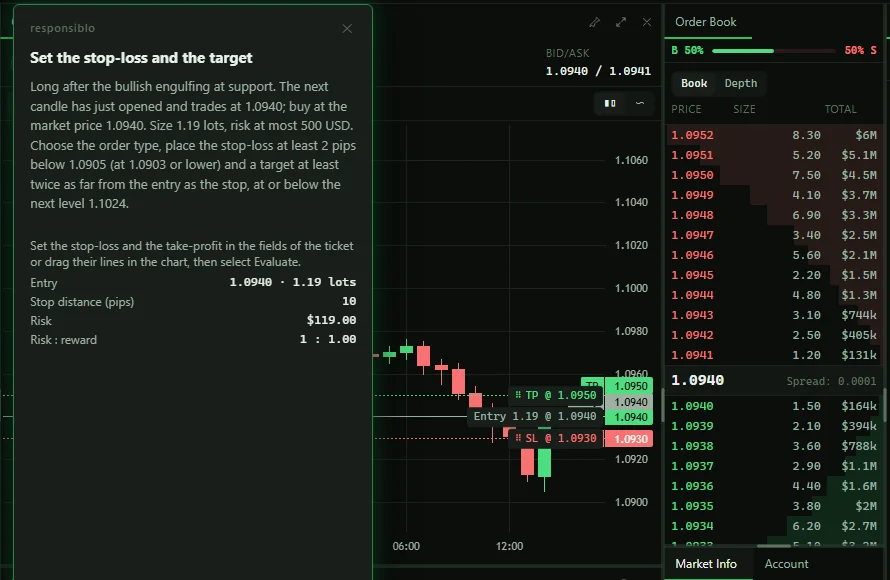
Stop-loss and target on the chart
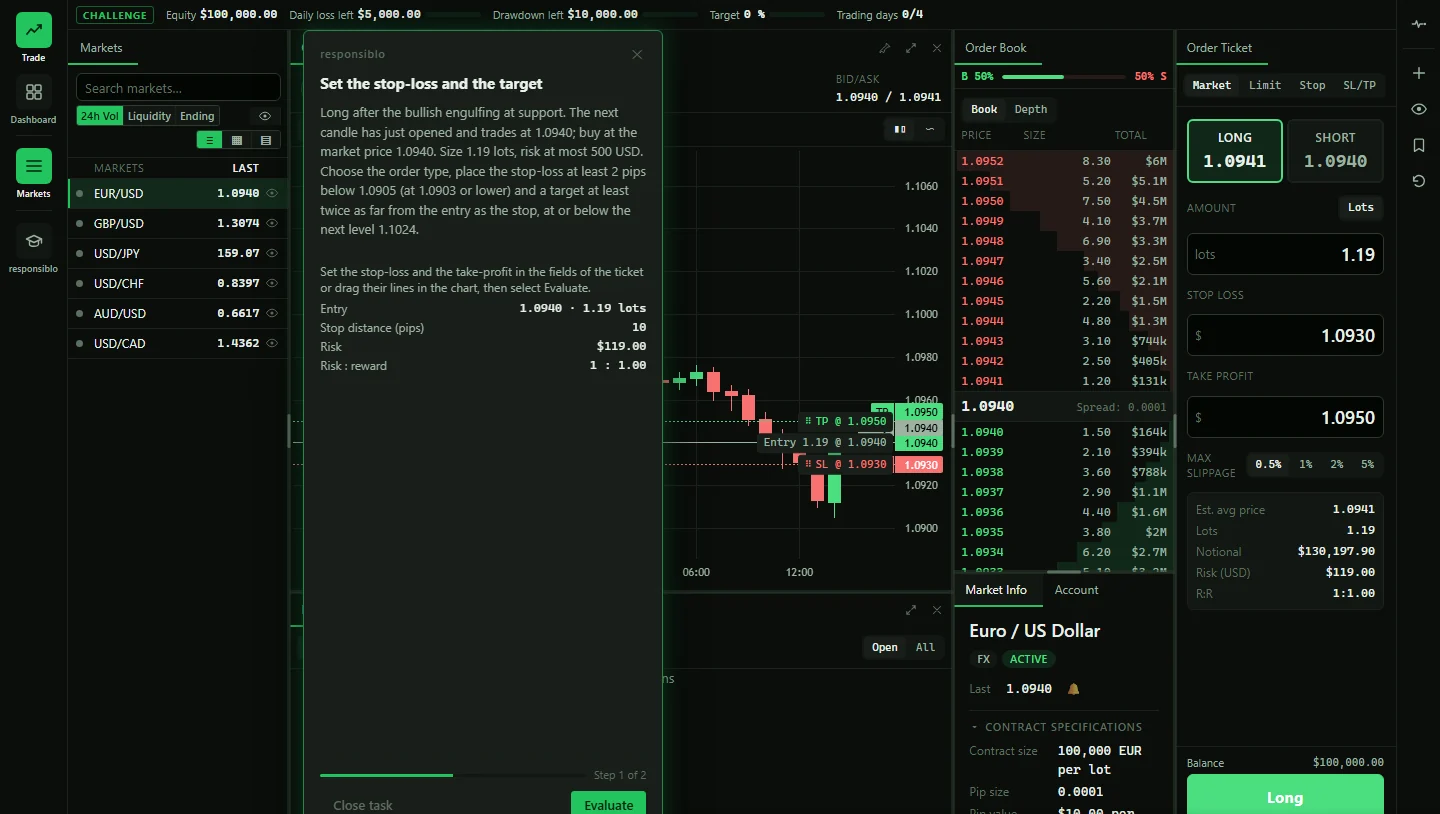
After a bullish engulfing candle at support, the trader chooses the order type and sets the stop-loss and the target in the ticket or drags their lines on the chart; the target must be at least twice as far as the stop.
03
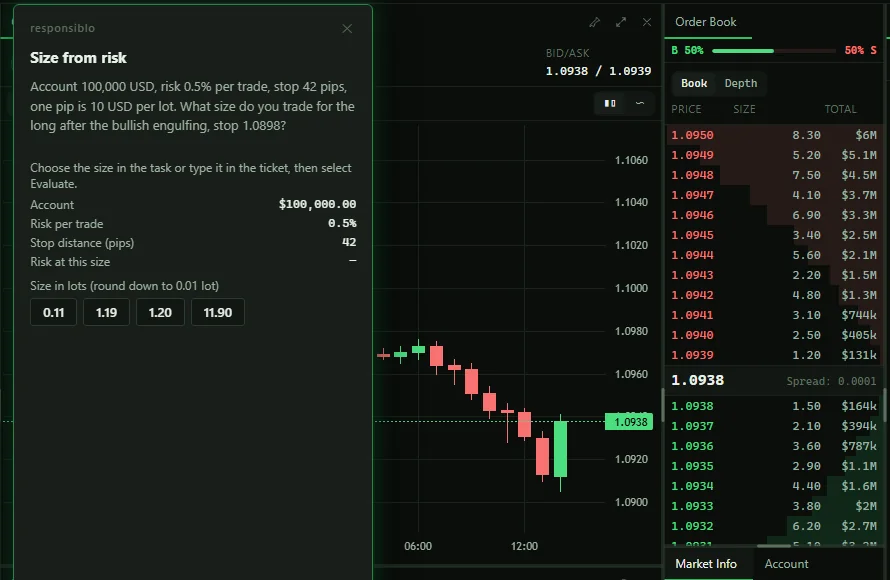
Position size from risk
An account of 100,000 USD, a risk of 0.5% per trade and a stop of 42 pips: the trader works out the position size in lots, rounded down to 0.01 lot.
04
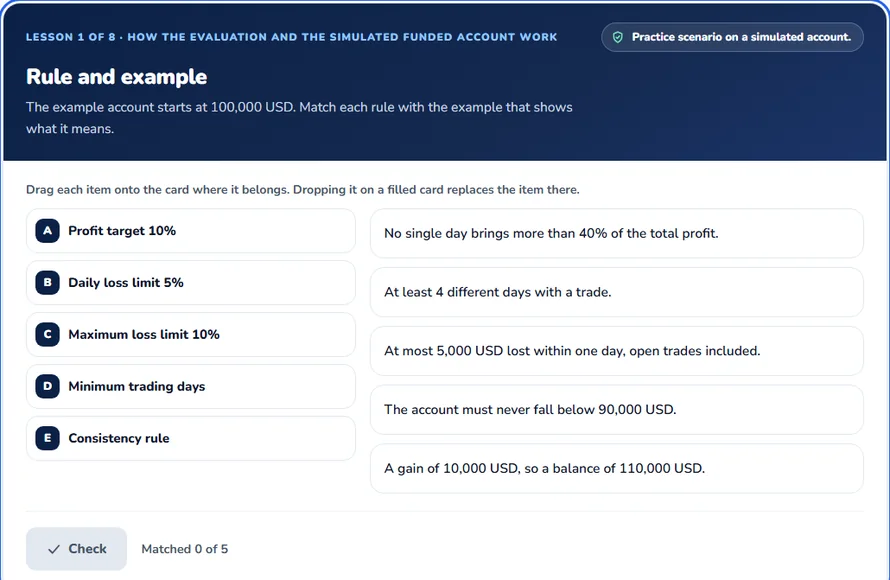
Evaluation rules by example
A practice exercise of lesson 1: the trader matches the profit target, the daily and maximum loss limits, minimum trading days and consistency with examples on a 100,000 USD account.
The practice terminal has 15 tasks of four kinds: read a candle, place an order with a stop-loss and a target, work out the position size from risk, and decide candle by candle when to enter and when to end the trading day. Every lesson also comes with 3 practice exercises. What is assessed is the process, not where the price went.
All charts use illustrative data, not real prices. The course is educational; it is not investment advice or a recommendation.
Who it is for
Three roles, one course
Traders in the evaluation
How the rules of the evaluation work: the profit target, the daily and maximum loss limits, minimum trading days, consistency and the practices that end an account.
Traders on a simulated funded account
How to plan the trading day, size every position from risk, keep a journal and stay disciplined after a series of losses.
Prop firm management
How to give your traders a common base of knowledge, with a verifiable certificate for every trader who completes the course.
Certification
A verifiable certificate after the final quiz
The course ends with a final quiz of 12 questions. Traders who answer at least 9 correctly receive a certificate with a unique number, a QR code and a public verification page where the firm can check at any time whether it is valid.
Verify a certificate Valid
Certificate issued to
Daniel Hart
Prop Trading, Funded Trader Essentials
Valid until
3 Dec 2028
Number
RSB-2026-07418
FAQ
What people ask most often
Who is the prop trading course for?
For prop firms that want to give their traders a common base of knowledge, and for traders who are preparing for a prop firm evaluation or already trade a simulated funded account.
What does a trader learn in the course?
Eight lessons lead from the rules of the evaluation and the simulated funded account through reading the candlestick chart, trend, support and resistance and candlestick patterns to entry, stop-loss and target on the chart, position size from risk, planning the trading day and a journal with discipline after losses.
What language is the course in?
The course is in English: the videos, articles, practice exercises, practice terminal and final quiz.
When does a trader receive the certificate?
After the final quiz of 12 questions, with at least 9 correct answers. The certificate has a unique number and a QR code, and its public verification page shows whether it is valid.
How can we offer the course to our traders?
Tell us through the contact form how many traders you want to train. We will agree how to give them access to the course.
What is the practice terminal?
The practice environment of the course with a candlestick chart, a strip of the account rules, an order book and a ticket. The trader completes 15 tasks in it: reads a candle, places an order with a stop-loss and a target, works out the position size from risk and decides candle by candle. What is assessed is the process, not where the price went, and the charts use illustrative data.
What account rules does the course work with?
With the rules of the course example: an account of 100,000 USD, a profit target of 10%, a daily loss limit of 5% including open trades, a maximum loss of 10%, at least 4 trading days and a consistency rule of 40%. On them the trader learns how evaluation rules work and what ends an account.
Education for your traders
Tell us how many traders you want to train, and we will agree how to give them access to the course.