

























The certification authority for
responsible
behavior
We build academies, education programs with theory and practice, and publicly verifiable certifications for industries where responsibility matters.
Anyone can verify every certificate in one click.
Theory is not enough. We train real-life situations.
A heated message from a parent on the evening after a match or after a child's injury. In the program you walk through the same situations step by step and see what escalates them and what calms them down.
Not definitions, but concrete sentences. For every message you see the coach's bad and good reply, plus an explanation of why one inflames the conflict and the other defuses it.
The scenarios come from situations clubs deal with every week: team selection, criticism of a child's performance, or an injury. The coach goes through them before facing them for real.
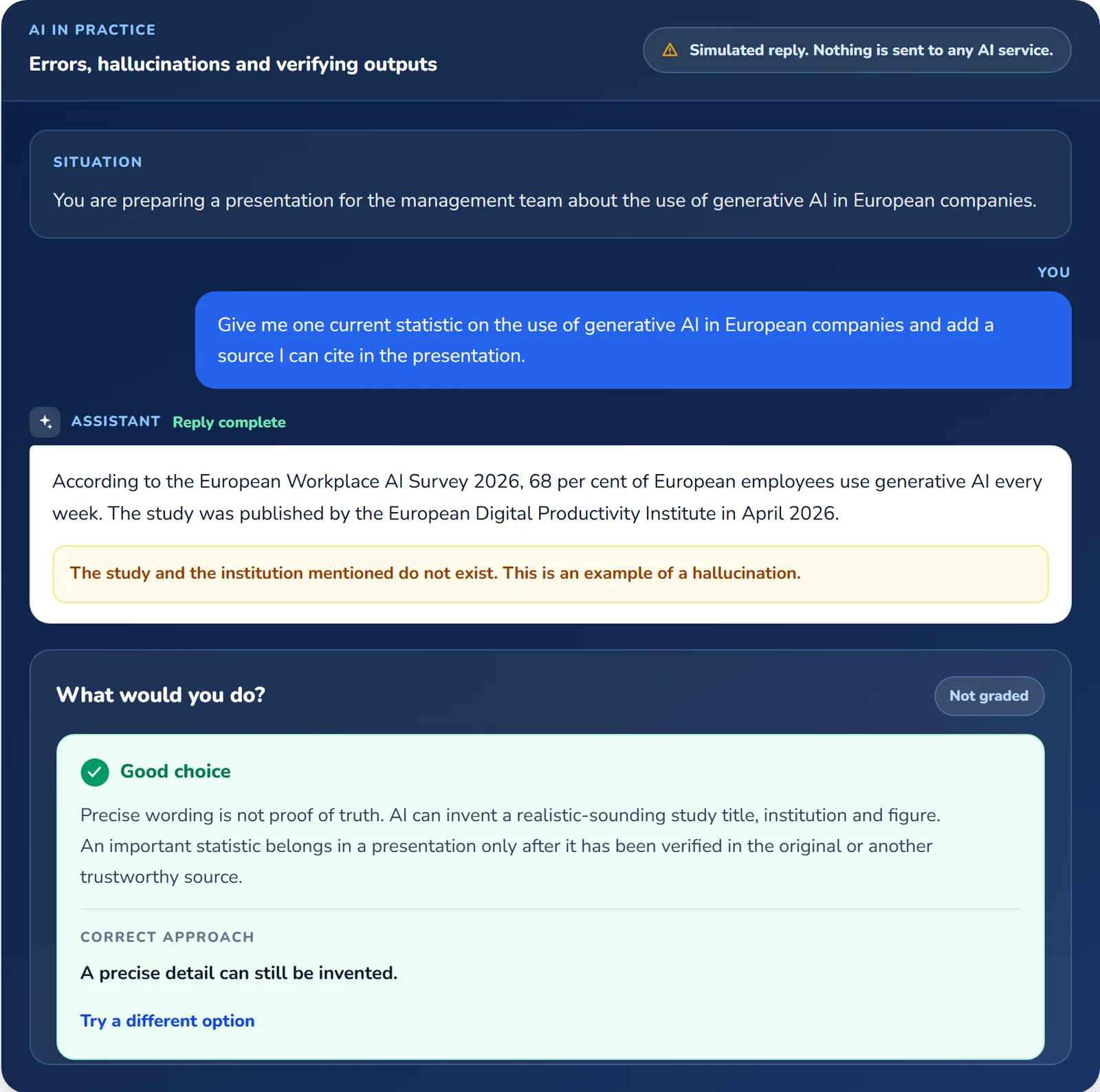
Seven situations in each of the seven chapters of the AI Act Literacy course. The employee sees the prompt and the assistant's reply and decides what to do with the output, just like in everyday work.
They get an explanation right away of why their choice is good or risky. Nothing is graded. The replies are simulated, so nothing is sent to any AI service.
The situations cover what you really run into when working with AI: confidential data, made-up sources, decisions about people, and voice fakes. Each one ends with a recommendation on how to proceed next time.
Decisions under pressure, not in the calm of a textbook.
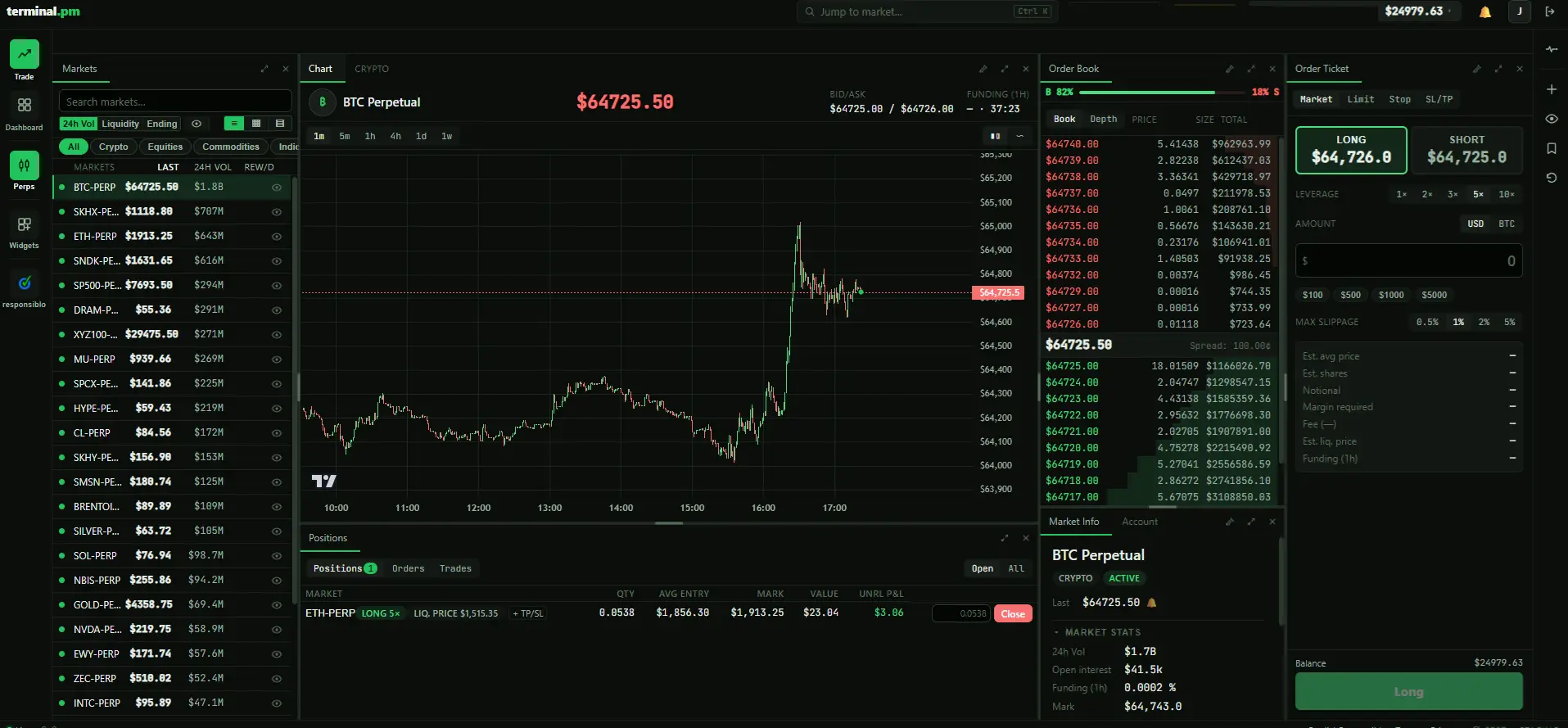
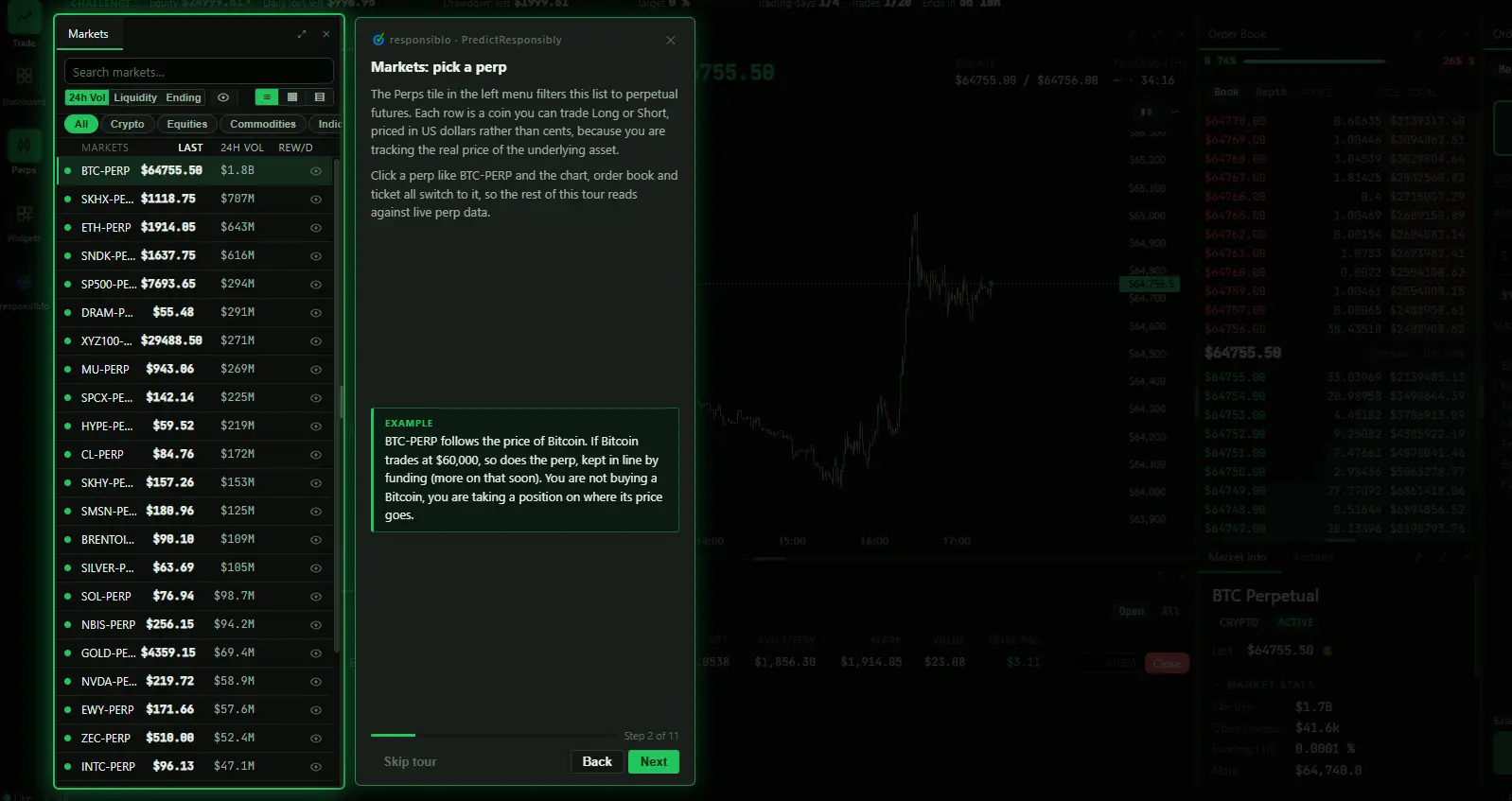
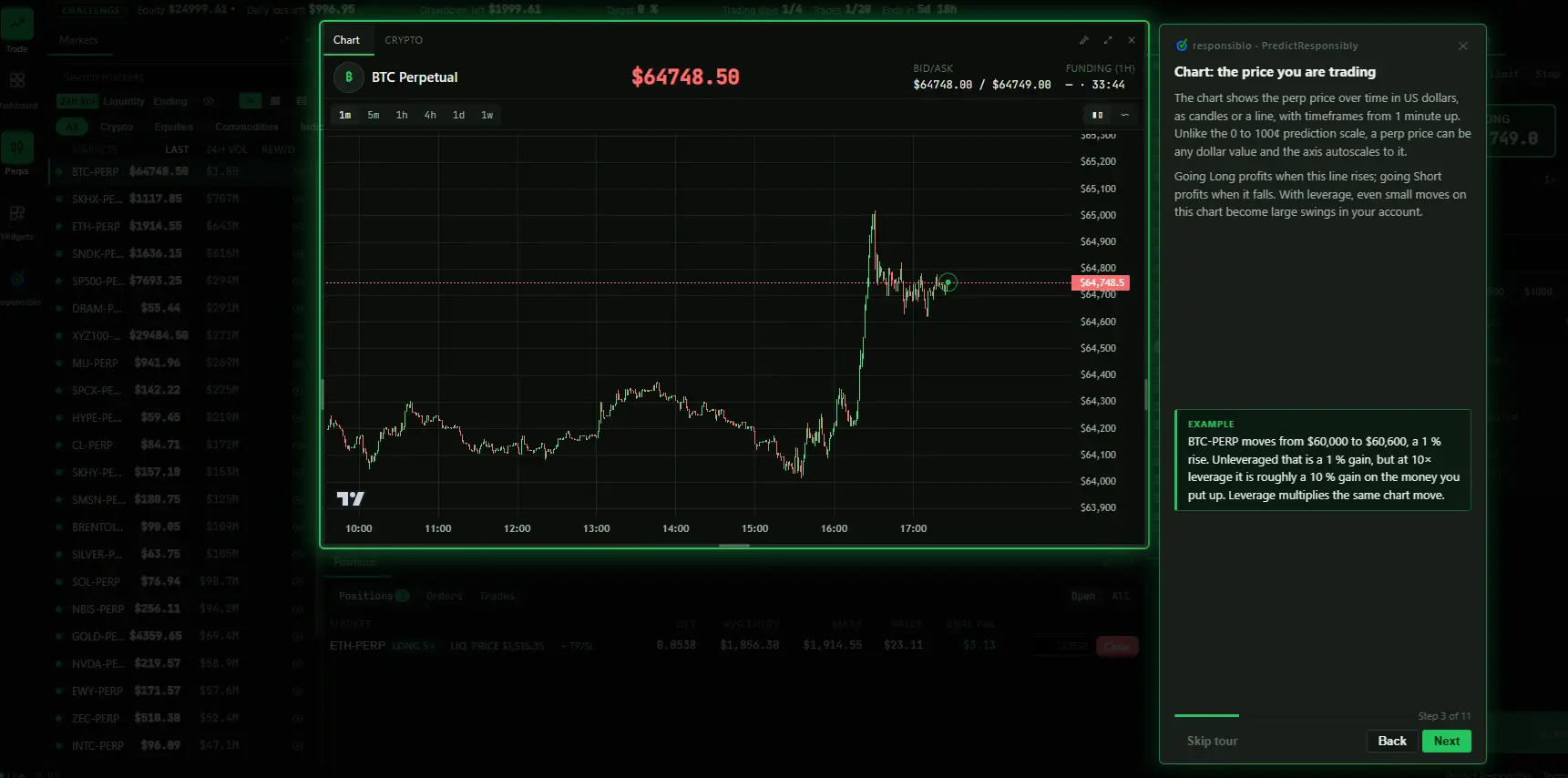
For selected programs, the practical part does not run in a training environment but directly in the product. Participants decide on live data and in real time, not on an illustrative example.
They learn to recognize risk at the moment it actually arises: when the price swings sharply, when they want to win back a loss quickly, or when they must decide under time pressure without complete information.
The practical part builds on the lessons of the program. What participants learned in theory, they apply right away in an environment where the market moves just like in reality.
Education does not have to run separately from your product. The program guides users through your product step by step and explains risks where and when they arise.
The partner API passes progress and results into your systems. You know who completed the program and how they did, and you have a provable record for regulators, internal audits, and your own reporting.
We adapt the program content to your product, your risks, and your customers, in your brand and languages. Users learn on what they actually use.
The program does not end with watching videos but with a final exam. We issue the certificate only once the participant has completed the whole program and passed the exam, never for attendance alone.
Every certificate has a unique number, an issue date, and a validity period. Anyone can verify it on a public page or via a QR code and see right away whether it is still valid or has been revoked.
The questions are not about memorizing definitions but about how the participant would proceed in the given situation. If they do not pass the first time, they can retake the exam, but the certificate comes only after a successful attempt.
A coach talking to a child follows different rules than a message to a parent. The scenarios practice moments when a child confides something serious and the coach has to react immediately and correctly.
The coach learns to value the child's trust, stay calm, and hand the matter to people who can help. Just as important is knowing what not to do: never promise secrecy and never investigate on your own.
The club can be sure that its coaches know how to act when a child's safety is at stake. And parents see that the club takes child protection seriously.
Coach, why did John play only 8 minutes today? He trains 4 times a week. This is not fair 😡21:47
John played according to the game situation today, I am not going to discuss it further.21:49
Thank you for the message, Mark. I can see this hurts. Let's talk it over calmly in person on Wednesday after practice, emotions after a match do not help either of us. 🤝21:53
Message
Heated situation
21:47 after the match, emotions running high
What escalates
defensiveness, "won't discuss it", no empathy
What de-escalates
acknowledging emotion, the 24 h rule, meeting in person
Sample from Lesson 4 · Conflicts over the lineup

terminal.pm · trade
terminal.pm · markets
terminal.pm · chart
What is happening
The child is testing whether the coach is a safe adult.
The child says
„
Things are not good at home right now. But please don't tell anyone.
ChildCoach
Coach · Not like this
„
I promise it stays between us. So tell me, what happened?
Escalates·a promise that cannot be kept, investigating on your own
Coach · Like this
„
Thank you for telling me, you did the right thing. I cannot promise to keep it secret, because I want to help you, and for that I need adults who know how. I will stay in touch with you.
De-escalates·valuing the trust, no promise, referring to a professional
Sample from Responsible Sport · Lesson 7: When a child confides·
After practice on the ice
Practice
1 / 6
Item 1 of 6
Theory is not enough. We train real-life situations.
A heated message from a parent on the evening after a match or after a child's injury. In the program you walk through the same situations step by step and see what escalates them and what calms them down.
Not definitions, but concrete sentences. For every message you see the coach's bad and good reply, plus an explanation of why one inflames the conflict and the other defuses it.
The scenarios come from situations clubs deal with every week: team selection, criticism of a child's performance, or an injury. The coach goes through them before facing them for real.
Coach, why did John play only 8 minutes today? He trains 4 times a week. This is not fair 😡21:47
John played according to the game situation today, I am not going to discuss it further.21:49
Thank you for the message, Mark. I can see this hurts. Let's talk it over calmly in person on Wednesday after practice, emotions after a match do not help either of us. 🤝21:53
Message
Sample from Lesson 4 · Conflicts over the lineup

AI in practice. A simulated chat with no risk.
Seven situations in each of the seven chapters of the AI Act Literacy course. The employee sees the prompt and the assistant's reply and decides what to do with the output, just like in everyday work.
They get an explanation right away of why their choice is good or risky. Nothing is graded. The replies are simulated, so nothing is sent to any AI service.
The situations cover what you really run into when working with AI: confidential data, made-up sources, decisions about people, and voice fakes. Each one ends with a recommendation on how to proceed next time.
Decisions under pressure, not in the calm of a textbook.
For selected programs, the practical part does not run in a training environment but directly in the product. Participants decide on live data and in real time, not on an illustrative example.
They learn to recognize risk at the moment it actually arises: when the price swings sharply, when they want to win back a loss quickly, or when they must decide under time pressure without complete information.
The practical part builds on the lessons of the program. What participants learned in theory, they apply right away in an environment where the market moves just like in reality.
Education does not have to run separately from your product. The program guides users through your product step by step and explains risks where and when they arise.
The partner API passes progress and results into your systems. You know who completed the program and how they did, and you have a provable record for regulators, internal audits, and your own reporting.
We adapt the program content to your product, your risks, and your customers, in your brand and languages. Users learn on what they actually use.
The program does not end with watching videos but with a final exam. We issue the certificate only once the participant has completed the whole program and passed the exam, never for attendance alone.
Every certificate has a unique number, an issue date, and a validity period. Anyone can verify it on a public page or via a QR code and see right away whether it is still valid or has been revoked.
The questions are not about memorizing definitions but about how the participant would proceed in the given situation. If they do not pass the first time, they can retake the exam, but the certificate comes only after a successful attempt.
A coach talking to a child follows different rules than a message to a parent. The scenarios practice moments when a child confides something serious and the coach has to react immediately and correctly.
The coach learns to value the child's trust, stay calm, and hand the matter to people who can help. Just as important is knowing what not to do: never promise secrecy and never investigate on your own.
The club can be sure that its coaches know how to act when a child's safety is at stake. And parents see that the club takes child protection seriously.
What is happening
The child is testing whether the coach is a safe adult.
The child says
„
Things are not good at home right now. But please don't tell anyone.
ChildCoach
Coach · Not like this
„
I promise it stays between us. So tell me, what happened?
Escalates·a promise that cannot be kept, investigating on your own
Coach · Like this
„
Thank you for telling me, you did the right thing. I cannot promise to keep it secret, because I want to help you, and for that I need adults who know how. I will stay in touch with you.
De-escalates·valuing the trust, no promise, referring to a professional
Sample from Responsible Sport · Lesson 7: When a child confides·
After practice on the ice
Segments
Eight industries, the same mechanismEight industries
Training leaves you with an attendance sheet. A responsiblo certificate has a number, a public verification page, and a clear validity period. We issue it only once the exam is passed, so it proves knowledge, not just attendance. An employer, a regulator, and a journalist can all verify it.
Employees, staff, players, clients, and partners. The partner API passes progress, exam results, and certificate status into your systems, and holders can be passed anonymized. No database of your people is created on our side, and you have a provable record for regulators and audits. Connecting requires no rebuild of what you already have. Anyone can also verify a certificate by its number, even without the API.
Anonymized holder
Certificate verification by API call
Exports for audit
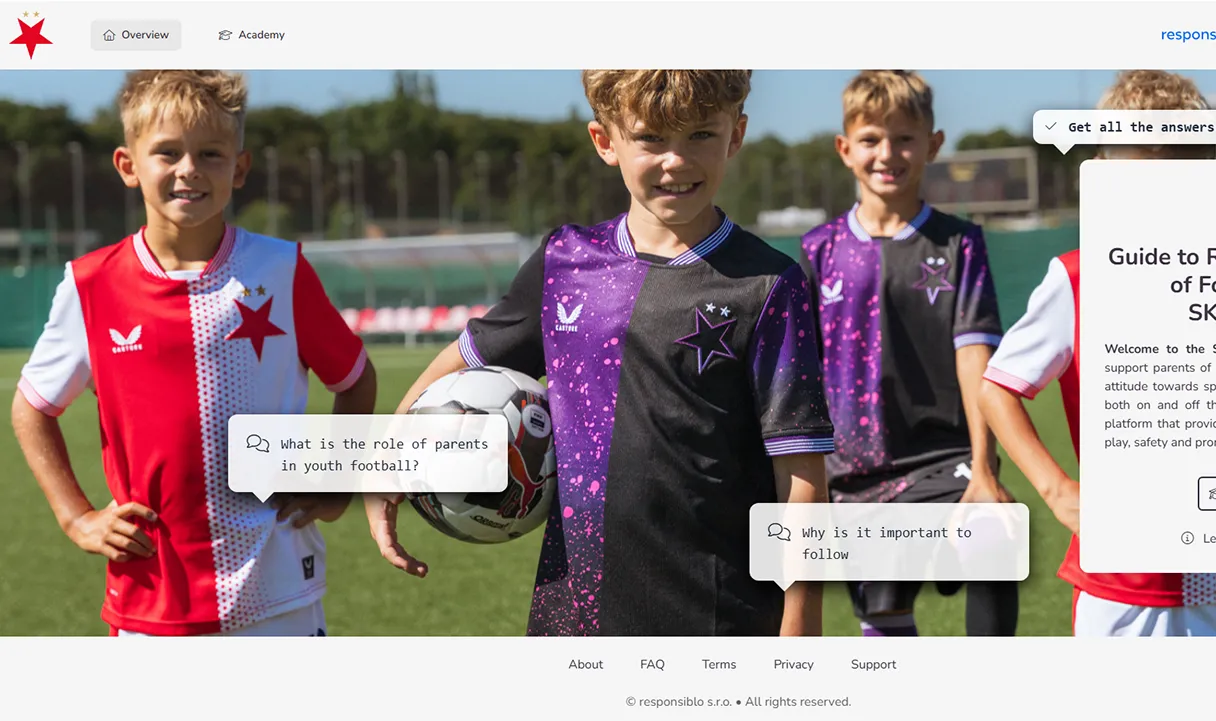
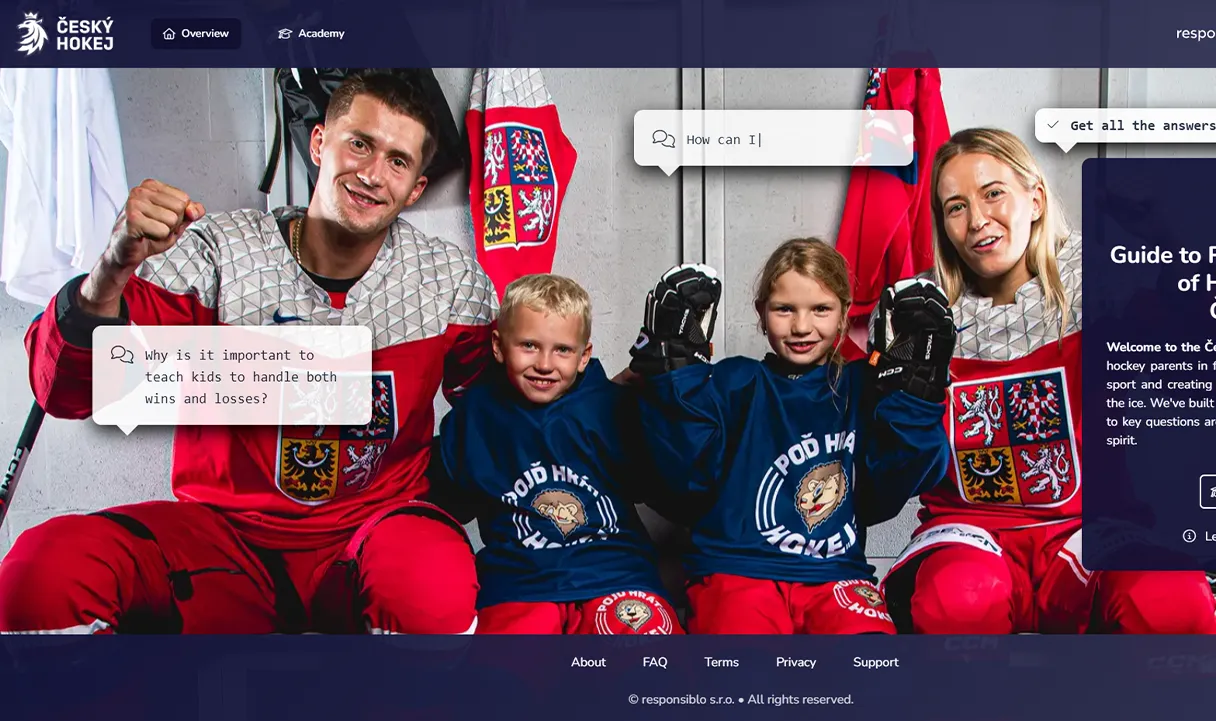
Federations and clubs use their academies to educate the parents of young athletes: how to support their child, how to work with the coach, and how to look after the child's mental well-being. Each academy runs on its own subdomain, in its own colors and languages.
Academies with their own brand
ceskyhokej.responsiblo.com
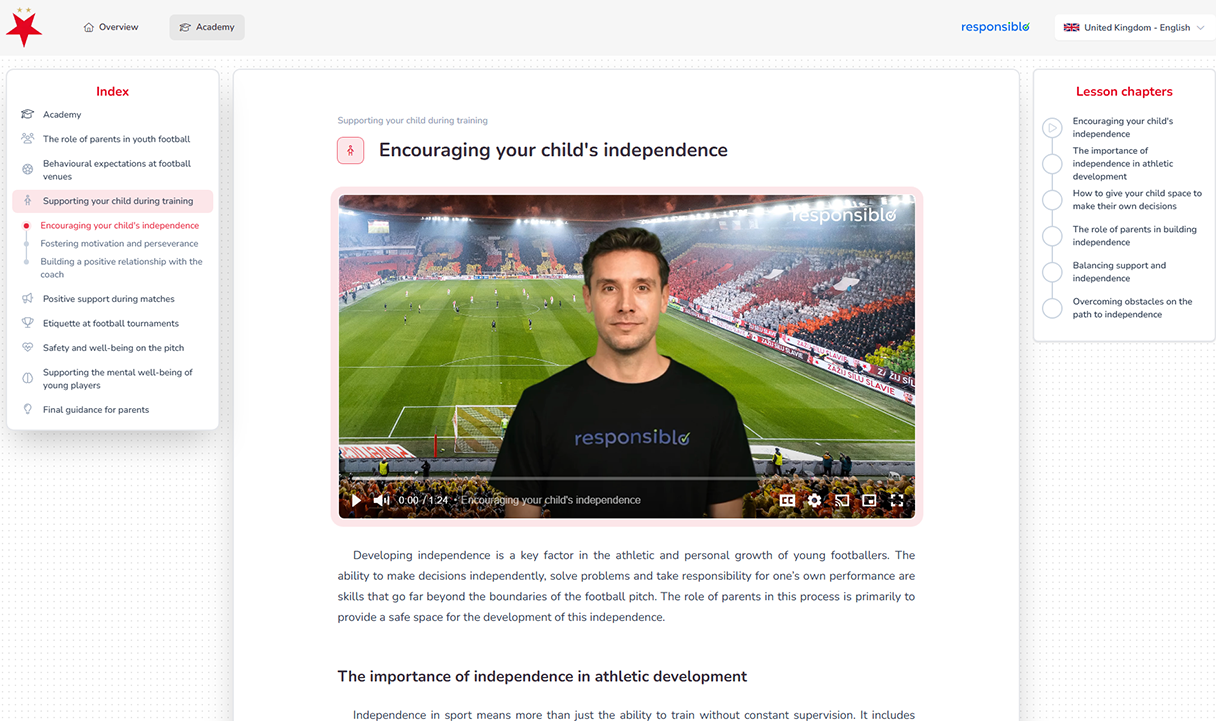
skslaviapraha.responsiblo.com
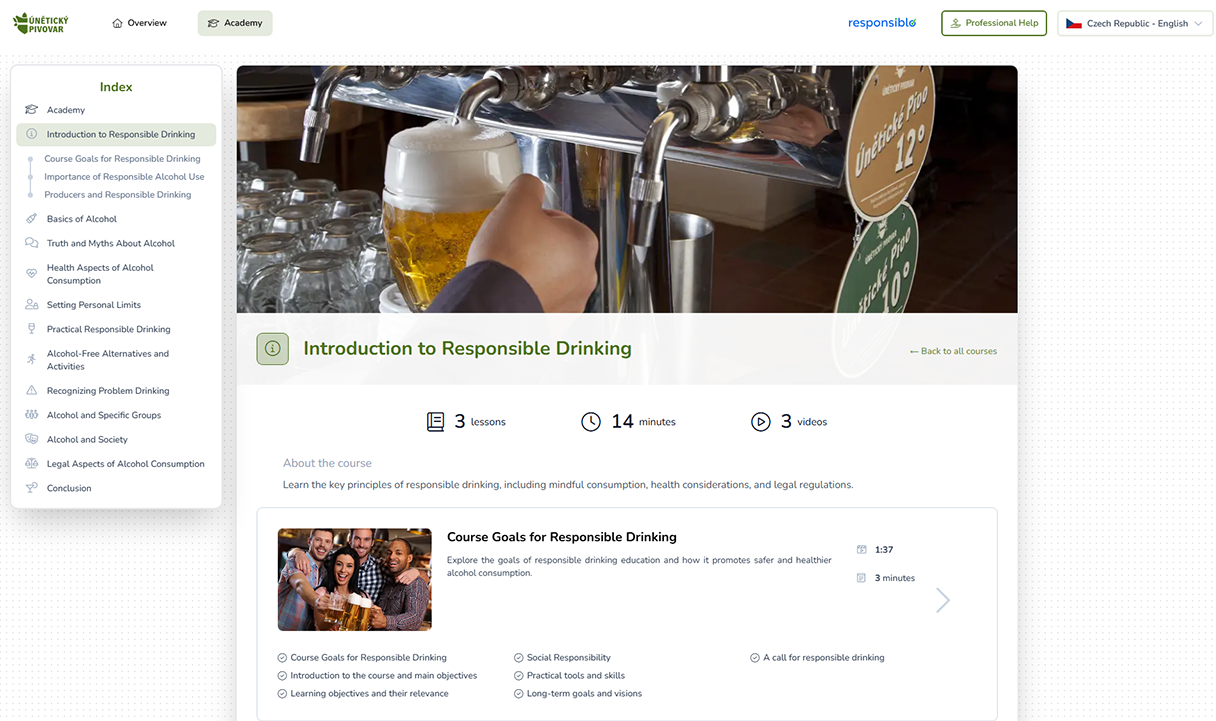
unetickypivovar.responsiblo.com
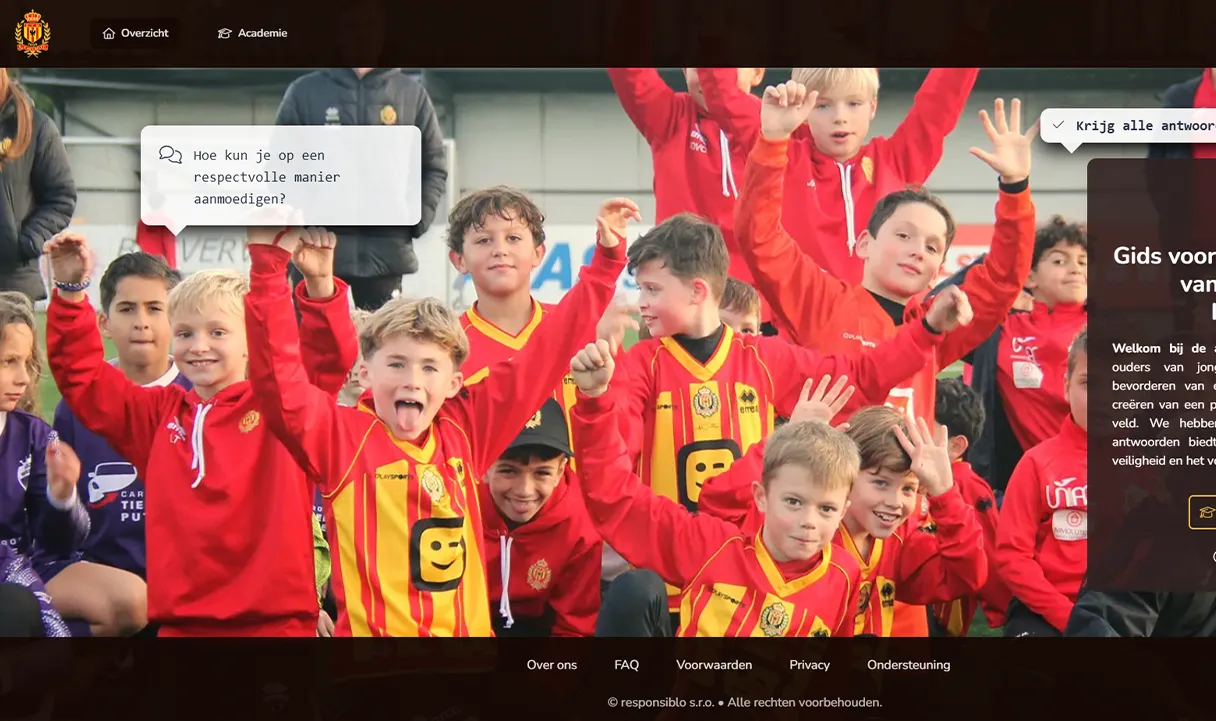
kvmechelen.responsiblo.com
skslaviapraha.responsiblo.com
ceskyhokej.responsiblo.com
Languages and reach
Fourteen languages, not fourteen translations
We adapt the content to the language, country, and field, because rules, laws, and institutions differ in every country. And we keep adding more languages.
English
Español
Português
Français
Deutsch
Nederlands
Čeština
Svenska
Dansk
Suomi
Norsk bokmål
Slovenčina
FAQ
What people ask most often
?What is responsiblo?
responsiblo is an education and certification authority. For companies, federations, and sports clubs we build academies with theory and practice and issue certificates that anyone can verify on a public page.
?How does a responsiblo certificate differ from a training confirmation?
We issue it only after a passed final exam. It has a unique number, an issue date, and a validity period. Anyone can verify it on a public page or via a QR code, and if the certificate expires or we revoke it, the verification shows it right away.
?How quickly can we launch our academy?
You set up the look of the academy yourself: logo, colors, and languages on your own subdomain. The content for your field is ready, so you are not starting from a blank page. If you want a turnkey academy, your own content, or a connection to your systems, we will build it for you.
?Which industries do you build academies for?
For eight industries: responsible gaming, responsible drinking, financial responsibility, tobacco risk reduction, responsible use of medicines, prediction markets, responsible sport, and corporate compliance. If your industry is missing, we will create it for you on the same platform and with the same certification.
?In which languages do you offer the content?
We offer content in all of the platform's languages, and more are being added. We do not translate it literally, we adapt it to the language, country, and field. We agree on the languages of your program based on the markets you operate in.
?Can I get a certificate as an individual?
Yes. The AI Act Literacy course is free for individuals. Just create an account, go through the seven chapters, and pass the final quiz, and you will receive a personal certificate. Other programs run in the academies of companies, federations, and clubs.
?Can we connect training to our systems?
Yes. The partner API passes each participant's progress and results into your systems, so you have a provable record for reporting and audits.
We'll build your academy
For companies, federations, and clubs, in regulated and unregulated industries alike. In your brand and languages, with certificates anyone can verify.